
Redfern Speech Anniversary: Why Paul Keating’s Words Still Resonate Today
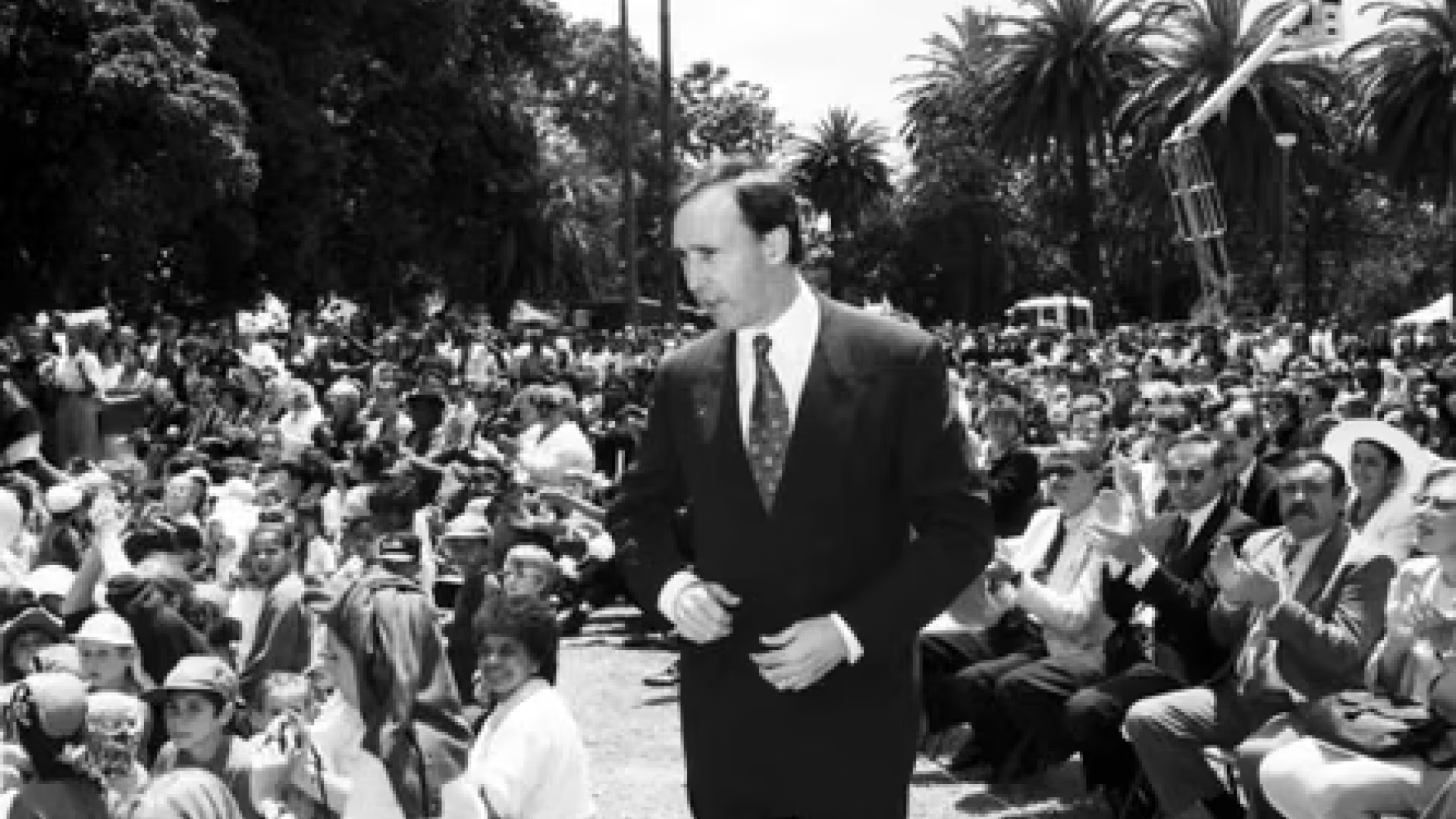
Today marks the anniversary of one of the most defining speeches in modern Australian history: Paul Keating’s Redfern Speech, delivered on 10 December 1992 in Redfern Park. Widely regarded as a turning point in the national dialogue about Indigenous rights, the speech remains a landmark moment in acknowledging the ongoing impacts of colonisation on Aboriginal and Torres Strait Islander peoples.
More than thirty years later, the Redfern Speech continues to be quoted, taught in schools, reflected on in community gatherings, and analysed in academic circles. Its relevance has not faded. If anything, recent discussions about truth-telling and reconciliation have brought Keating’s message into renewed focus.
Keating’s Motivation: A Turning Point in National Identity
Paul Keating’s motivations in delivering the Redfern Speech were both political and personal. In the months leading up to the speech, the High Court’s Mabo decision had overturned the concept of terra nullius and affirmed Indigenous land rights. Australia was being forced to reckon with long-silenced truths.
But for Keating, this moment demanded more than legal reform, it required honesty from the nation itself.
Keating believed Australia could only move forward if it openly acknowledged the injustices of the past. He argued that reconciliation could not be built on denial or distance, stating:
“We failed to ask — how would I feel if this were done to me?”
In drafting the speech, Keating sought guidance and feedback from Indigenous leaders, ensuring the words reflected lived realities rather than political abstraction. And delivering the speech in Redfern to a predominantly Aboriginal audience was itself an act of accountability.
A Historic Acknowledgement of Responsibility
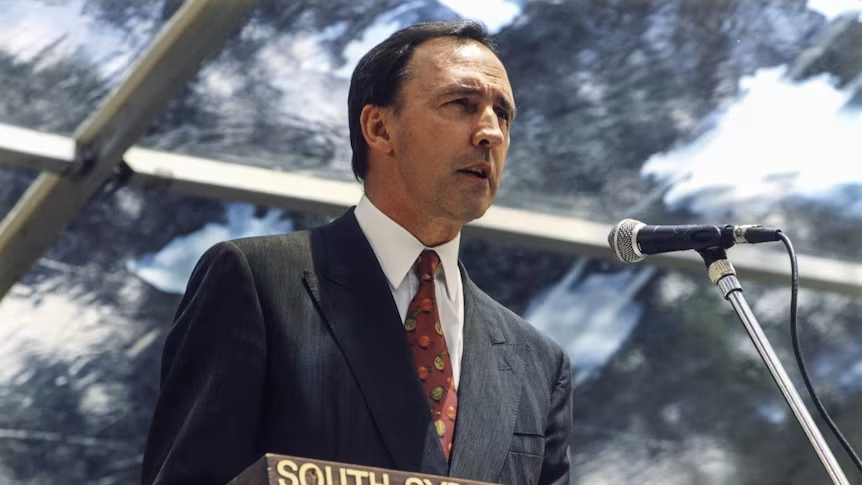
The Redfern Speech was remarkable for its clarity and directness. Keating did not speak in generalities or passive language. He named the harm plainly:
“We took the traditional lands and smashed the traditional way of life.
We brought the diseases and the alcohol.
We committed the murders.
We took the children from their mothers.”
These statements marked a profound shift in Australian public discourse. They acknowledged that the impacts of colonisation were not abstract historical events, but acts carried out by governments and society and that the consequences continue.
Keating was equally direct about the present:
“The problem starts with us. Non-Aboriginal Australians are the beneficiaries of injustice.”
It was a moment that challenged the nation to face itself.
Why the Redfern Speech Still Matters Today
The speech continues to resonate because many of the injustices it named remain unresolved. Aboriginal and Torres Strait Islander communities continue to face systemic barriers in health, education, employment, and justice.
The Redfern Speech remains relevant because it speaks to responsibility not guilt, but action:
“We cannot confidently say that we have succeeded in taking these matters to our hearts.”
Reconciliation, as Keating insisted, is not symbolic. It is practical, continuous, and grounded in truth.
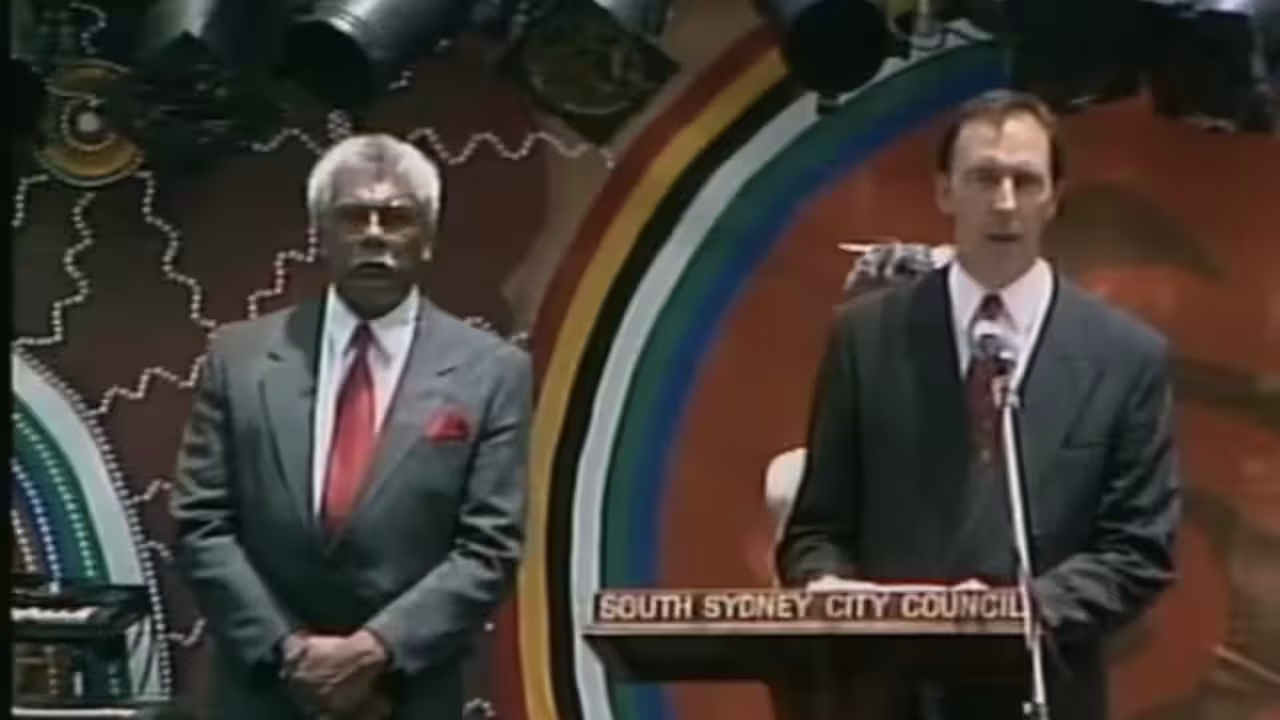
As the anniversary today, we remember that the power of the Redfern Speech lies not only in the Prime Minister who delivered it, but in the community who heard it, Elders, leaders, families, and young people whose histories and futures were being spoken of in public and on record.
“There is nothing to fear or to lose in the recognition of historical truth.”
On this eve, we reflect, we listen, and we recommit to the work ahead.
Reconciliation is not finished.
The conversation is not over.
The work continues today, tomorrow, and for generations to come.
Check out the full speech here: